RSPO-Certified Palm Oil: How Our Supply Chain Works
Learn how RSPO-certified sourcing and our preparation for the EU Deforestation Regulation (EUDR) support the traceability of our palm oil supply chain.
What Is RSPO-Certified Palm Oil
Palm oil is a versatile ingredient used in food, personal care, and candle applications, with a balanced fatty acid composition. Palm oil has one of the highest oil yields per hectare of the major commercial vegetable oil crops. The oil palm is a perennial crop that typically produces fruit for around 25 years before replanting, unlike annual crops such as soybean or sunflower. Unlike annual crops such as soybean or sunflower, oil palm is a perennial crop that typically produces fruit for around 25 years before replanting.
Yield and crop life don’t, by themselves, make palm oil production sustainable. That depends on how it's grown. The RSPO (Roundtable on Sustainable Palm Oil) certification standard, of which we are a founding member, sets requirements covering:
- Requirements on deforestation and land conversion
- Efficient land use
- Protection of peatlands
- Integrated pest management
- Biodiversity conservation

Is Palm Oil Sustainable?
The environmental and social impact of palm oil depends largely on how and where the oil palm is grown and how the supply chain is managed.
Oil palm yields more oil per hectare than other major vegetable oil crops. This means less agricultural land is needed to produce a given quantity of vegetable oil. Oil palm is also a perennial crop. A productive plantation typically has a commercial life of around 25 years before replanting, unlike annual oil crops such as soybean and sunflower.
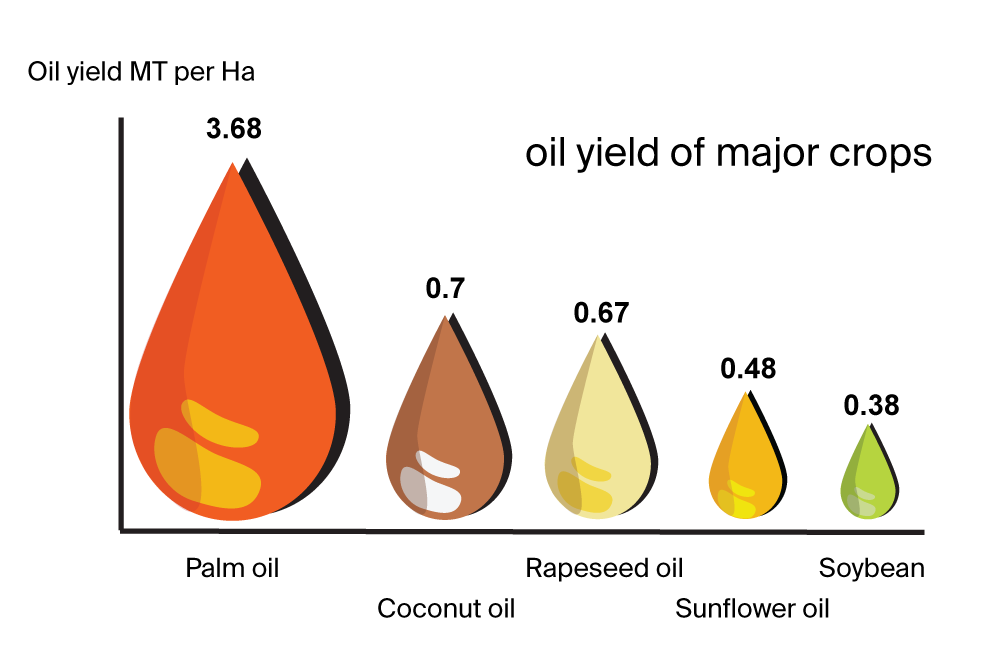
These characteristics alone do not determine whether palm oil is produced sustainably. Production practices, land use, biodiversity, working conditions, and supply chain controls also play an important role.
RSPO certification provides a recognized framework for addressing these areas. Its Principles and Criteria include requirements on deforestation and land conversion, peatland protection, biodiversity, workers' rights, and local communities.
For our Zwijndrecht palm oil supply, we use an RSPO-certified Segregated supply chain. Under this model, RSPO-certified palm oil stays separate from non-certified palm oil throughout the certified supply chain.
For customers, this provides a defined certification framework and documented supply chain model for sourcing RSPO-certified palm oil.
How palm oil is produced and sourced plays an important role in its environmental and social impacts.
What RSPO-Certified Palm Oil Means for Your Supply Chain
For customers, RSPO certification provides a recognized framework for sourcing certified palm oil and documenting the supply chain model used.
At SD Guthrie International, our Zwijndrecht palm oil supply is based on an RSPO-certified Segregated supply chain. We are also preparing our palm oil supply chain, traceability systems, and documentation for the requirements of the EU Deforestation Regulation (EUDR).
Our EUDR implementation work includes geolocation, traceability, and due diligence information required under the regulation. Implementation is ongoing, and we will provide further information about our EUDR supply capabilities and documentation as our preparations progress.
Questions about RSPO certification, palm oil traceability, or EUDR documentation?
Get in touch with our team